
Why Every Indian Traveler Is Turning Into a Content Creator
The way India is discovering the world is changing through the use of smartphones, social media and a thriving online travel community.
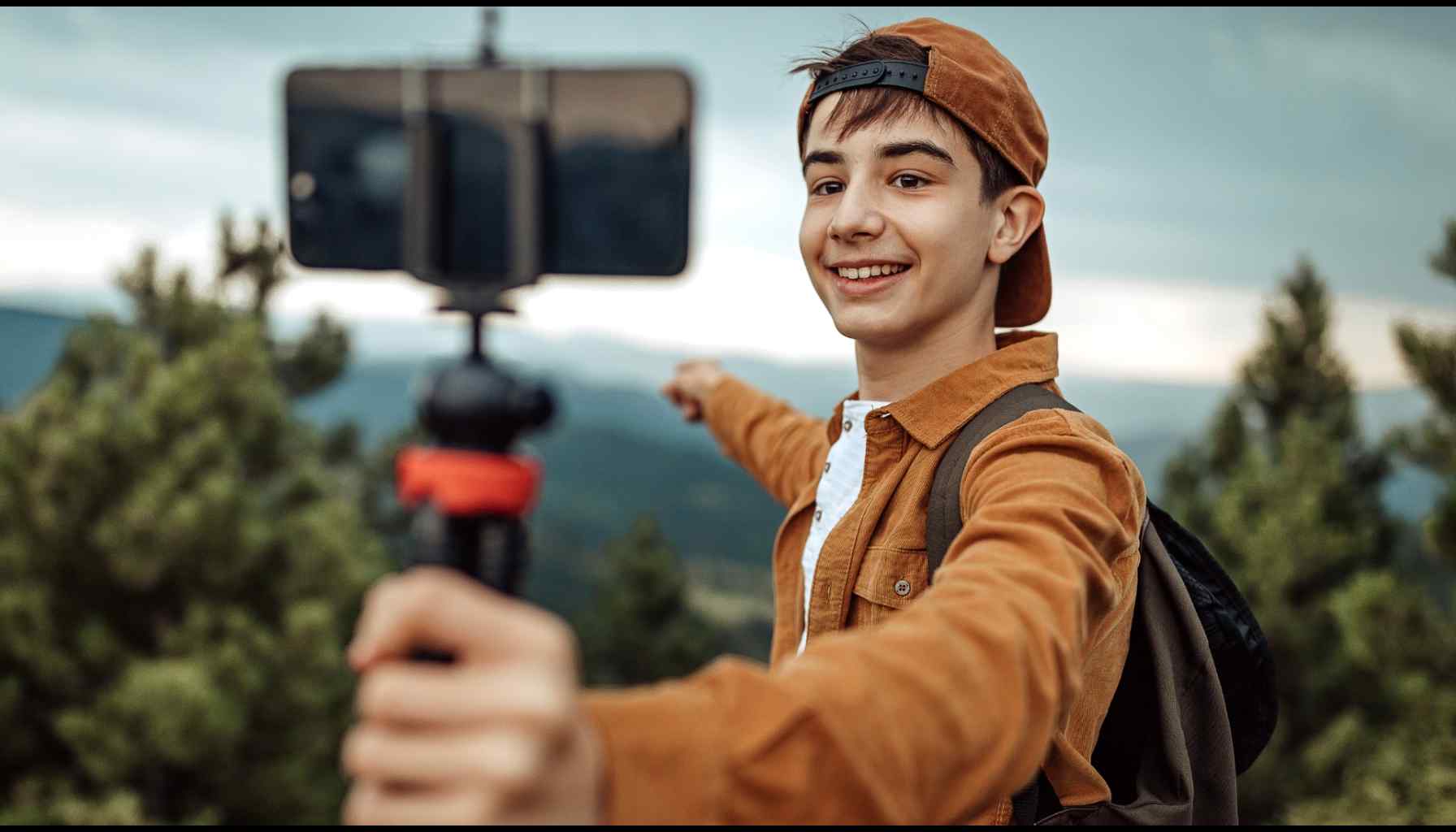
Imagine the scenario: a 24-year-old Jaipur resident is on one side of the living root bridges in Meghalaya, with her phone held high, as the golden hour light falls across her face, not merely capturing the moment but filming it onto a reel which will have 50,000 strangers by morning. She is not a professional photographer. She does not work for a tourism board. She is merely a traveller who has found out that sharing her journey is as good as the journey itself.
This scene is being played out in India on a daily basis. A silent revolution is going on between the snow-topped passes of Ladakh and the backwaters of Kerala, in which each passenger is a story-teller, each journey is a shoot, and every place is a viral moment. India is not merely creating more travellers, but it is generating a generation of travel writers and redefining what travelling is.
The smartphone turned everybody into a movie maker
Travel documentation was a decade ago, which meant a camera, a DSLR, that was even more expensive than the journey itself. The phone in the pocket of any Indian traveller can now take 4K video in real-time, process HDR photographs, and share them with an audience of millions. The entry barrier is totally down.
There are also well over 750 million internet users in India, and applications such as Instagram, YouTube, and the domestic ShareChat have provided every traveller with a platform. When a college student in Pune writes about her solo journey to Spiti Valley – on a shoestring budget – she is not merely creating memories; she is creating pieces of content on which thousands of other individuals will stuff their bags.
The Rise of the Traveller Community
This is not an individual ambition that makes this movement sustainable; it is the power of the traveller community building around it. Indian travellers are no longer lone travellers who are assembling tips from old-fashioned guidebooks. They are members of successful groups of fellow travellers who can give directions, guard against fraud, glorify in finds, and congratulate one another.
There are Facebook groups of Himalayan trekking with hundreds of thousands of users. WhatsApp groups of individual female travellers share live safety information. Telegram channels with the focus on low-cost travel provide the crowd-sourced reviews of the hostels that cannot be purchased by the hotel chains. The Indian travel fraternity has been an informal yet very potent institution.
In this type of travel community, the creation of content has turned into a contribution to the community. Sharing a thread about Ziro Valley that was done well is a form of repayment – of returning the favour that someone had done you. The love language of the community has been established as content creation.
The Pull of the Online Travel Community
There is no other factor which has contributed to this transformation at a faster rate than the online travel community. Sub-communities such as r/IndiTravel of the platform Reddit, as well as applications focused on travel and YouTube microchannels, have provided platforms where knowledge about Indian travel can be both consumed and produced on a large scale.
The feedback loop is drunk. You post a photo from Coorg. One of the strangers in Bengaluru posts a comment requesting the precise opinion. You reply. They tag you when they visit. You have just joined an online travel community which, post by post, is creating the most comprehensive and true-to-life travel database of India.
This is also a very democratic community of travellers. A blue tick or a brand deal is neither necessary to play a role here. An open and candid blog entry about a catastrophic visit to Rajasthan would receive more interaction than a sponsored glitzy reel by a five-star hotel. The currency that is valued in the online travel community is authenticity, and Indian travellers are abundant with it.
Why Indians are naturally gifted storytellers
India is a civilisation that is based on stories. Since the oral epics of the ancient period up to the modern-day Bollywood machine, the story has always been at the centre of Indian culture. When you hand an Indian traveller a camera and a platform, you are not instructing the man in anything new; you are simply giving form to something he already knows how to do.
The Indian country itself helps in its diversity. Domestic travelling consists of passing across the linguistic boundaries, food borders, and climate areas in a matter of hours. Any journey is a narrative of difference and newness. A Tamilian tourist in Himachal Pradesh is exploring a landscape that is truly foreign to him or her. The richness of the content that comes out of such an encounter has the depth and richness that most aesthetic travel photography never has.
The Economics of Travel Content
To tell the truth, the issue of monetisation is important. Travels are costly, and the concept of subsidising the expenses, or even making it a source of income, is an extremely strong incentive. The creators in India have seen their counterparts transform travel channels into full-time jobs, and such an option has justified the creation of content as an activity that ought to be taken seriously.
However, economics is not limited to personal profit. Tourist boards, homestays, local airlines, and adventure guides have all realised that a message left by an approachable travel blogger is better than the costly conventional advertising. There has never been greater demand by real Indian travellers for genuine travel content, and that is what the travellers' community is supplying enthusiastically.
The Problems That Nobody Speaks About
This boom does not pass without resistance. The necessity to write about everything might deprive a location of its experience. Travellers admit that they have spent their golden hour wasting it on angles rather than just sitting back and watching the sun go down. The distinction between living the journey and doing it is now too thin.
There exists the cost of the environment as well. Instagram-popular places are being death-and-tripped. The Northeast has fragile ecosystems; the Varanasi sacred ghats; and clean beaches in Goa are all strained by the foot traffic that the viral content creates. Even the most responsible voices in the travel community are beginning to pose the question: How do we share without destroying?
Those who grapple with this question publicly are the best travel creators – the ones who use their platforms to preach about responsible tourism, local economies and sustainability. The ethics of the online travel community are gradually, gradually emerging.
What This Shift Means for Indian Tourism
The impacts on Indian tourism are far-reaching. Tier-2 and Tier-3 destinations in places that no government campaign had ever managed to bring into the limelight are now on the map because one traveller created a reel that was worth watching. Arunachal Pradesh, Mechuka, and Chopta in Uttarakhand. Gandikota in Andhra Pradesh. These are not locations that were featured in fancy travel magazines. They were found, cartographed and popularised by the common traveller in giving an account of his experiences in a society to travellers who believed him.
It is peer-to-peer tourism marketing on a scale and genuineness that no marketing budget can match. And it is all so Indian of it, based on local knowledge, local languages, local humour, and a local sense of what a place should be visited for.
The Story and the Journey Now One
Today, the Indian traveller would not regard a distinction in the process of experiencing somewhere and sharing it. The documentation does not stand out as distracting from the journey – for many, it is now an inseparable element of the journey. A place is named when one creates a narrative of the place, which enhances the interest in that place. It requires observation, articulation and attention.
And the outcome is something unprecedented: a huge, ever-expanding, all-too-human collection of India and the world, created not by institutions but by a community of travellers, curious people who could not, indeed, restrain themselves when it came to communicating what they had discovered.
And the next time you encounter somebody capturing the sunrise on a mountain pass or telling their phone camera about their street food find of the day, do not assume they are being vain or distracted. Consider it a kind of as old as mankind itself: the traveller home with tales-- only this time there is no home, and the tales know no boundaries but come still more swiftly than the speakers of them.



0 Comments
No comments yet. Be the first to comment!