
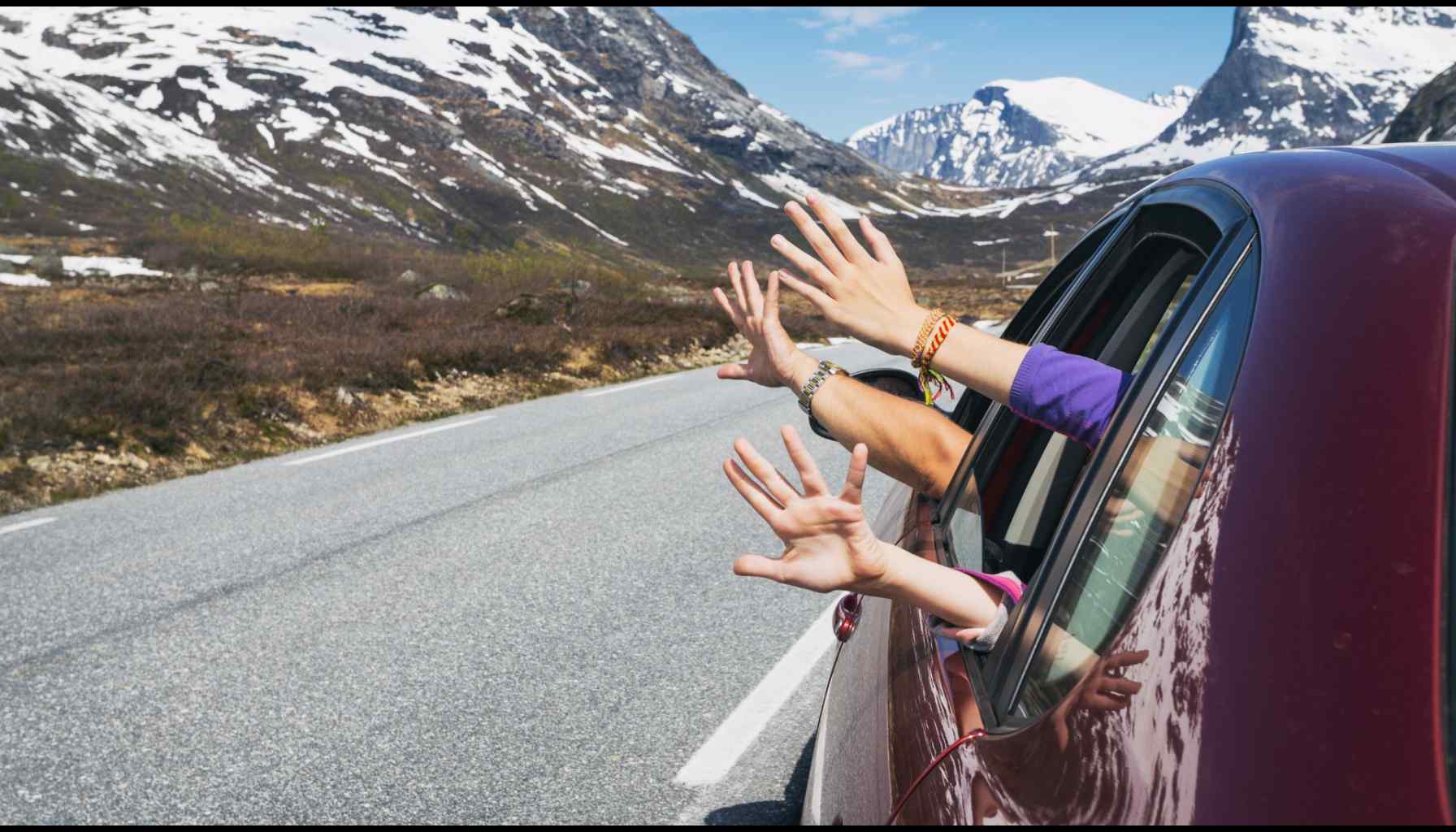
How Weekend Trips Can Fix Burnout and Work Stress — The Indian Professional's Guide
The Solution to Burnout and Work Stress: How Weekend Trips Can Solve the Problem of Burnout and Stress at Work - The Indian Professional Guide.
India runs on ambition. From the start-up streets of Bengaluru to the trading desks of Mumbai, from the IT towns of Hyderabad to the business towers of Gurugram, millions of Indians get their own wake-up calls every morning and dedicate all that they have to their jobs. And long had that hustle been eulogised. Grind culture was somehow a badge of honour.
But something has shifted. More Indian professionals are secretly burning out, not due to weaknesses but due to the sheer pressure that has turned out to be real. Inherent to the long commutes, consecutive meetings, the ambivalence between work and home post-WFH, and the cultural pressure of family expectations on the professional demands. It adds up. Faster than most of us admit.
The good news? India is a country that is highly geographically endowed with landscapes all over. And in 3-6 hours of virtually every big city, there are mountains, coastlines, forests, heritage towns, and hill stations all eager to offer precisely the type of reset that cannot be offered by any productivity app.
This is why weekend trips are among the most useful solutions to burnout – and how Indians can take advantage of what is available within their reach.
The Indian Burnout Reality: It is not the same here
Burnout in India is of a different order. In contrast to certain Western cultures, where mental health discussions have become somehow normalised, most Indian practitioners continue to experience a sense of pressure to look good, to continue working, to give birth, and never to be exhausted. Leaving work may seem like a form of weakness. It may seem like a failure to say that you are burnt out.
The stats, however, don't lie. The various workplace surveys carried out within India over the last years have always recorded Indian employees as one of the most stressed labour forces in the Asia-Pacific region. The Indian burnout is a very complex experience due to such factors as excessive working hours (typically 10 to 12 hours a day in the metro), anxiety because of the high cost of living, work uncertainty in the volatile industry, and social pressure to always do more.
And then there's the guilt. Even having a weekend off makes many Indian professionals feel guilty, as they are concerned that the failure to do so may make them appear less dedicated than their colleagues, not to mention the inability to simply move their minds not to their phones. The outcome is a tired and yet not resting population, a stressed yet not recovering population.
That is why the order of a thoughtful, premeditated weekend getaway that is not a visit home because you have a festival to go to, not a wedding, because you have to be on your feet three days long, but a genuine, relaxing vacation is so crucial.
Why Two Days Is Enough (Really)
One of the most raised arguments by Indian professionals who are time-starved is: 'Two days are not enough to make any difference.' When I come there and go back, the weekend is lost.
However, the studies of positive psychology have a different tale. It is not the amount of time off but rather the quality of the psychological offloading that is crucial in terms of psychological restoration. Even 48 hours in a truly different setting, when there are no work calls and you are not worried about the household routine, can still significantly decrease cortisol levels, replenish attentional resources, and even lift your mood days later.
There is also the anticipation effect. Simply making a reason to go somewhere this weekend and booking the hotel, reading about the destination, and chatting about it with a friend or your group of travellers online will lift your spirits and calm you down more than you have even made a single bag.
A planned two-day time is more than sufficient to start recovering due to burnout.
India's Weekend Escape Landscape: You're Closer Than You Think
This is where India really excels. The geographical diversity of this nation has the effect that, whichever metropolis you reside in, you can be in an entirely different world by Friday night.
If you're in Mumbai or Pune
The mountain rivers of Sahyadri are almost in the backyard. Places such as Mahabaleshwar, Lonavala, Igatpuri, Matheran (a car-free hill station – remarkably peaceful), and the coastal strips of the Konkan coast (Alibaug, Ganpatipule, and Tarkarli) have misty forests and cataracts, silent beaches, and fresh seafood. By noon a Friday night ride or a Saturday morning drive will get you breathing mountain air.
If you're in Bengaluru
You're surrounded by options. Coorg (Kodagu) is one of the most popular destinations in India that can help you relax and forget about stress and pressure in a second – coffee estates, morning mist, and practically no need to check your phone. Based on the same serenity, Chikmagalur is also accompanied by trekking. Hampi, a UNESCO World Heritage Site, is a dreamy view of ancient ruins and rock fields which seems to be absolutely beyond time – which is precisely what burnout requires. An easy drive is Wayanad across the Kerala border, which is a whole different world to city life.
If you're in Delhi or Gurugram
The Himalayas are even nearer than the majority of Delhiites think. Knowledge on spiritual serenity and adventure activities, such as rafting and hiking, is available in Rishikesh and Haridwar. Lansdowne is a quaint and little-used hill station of an old colonial aspect. Kasol in Himachal Pradesh is a major destination among young professionals who want to enjoy the calmness of the mountain. To those in search of heritage, Agra and Jaipur offer culture-filled escapes that are infinitely out of touch with the NCR grind.
In case you are in Hyderabad or Chennai
Hyderabadis can have the beautiful lakes and forests of Araku Valley in Andhra Pradesh and the serene temple town of Warangal to have a cultural reset. Chennai and the Nilgiris (Ooty, Coonoor, and Kotagiri) available here are so restorative. Pondicherry, with its streets of the French quarter, its cafes on the beach, and its hurly-burly, is, perhaps, the nearest thing to a European excursion that we can find within the boundaries of Tamil Nadu.
If you're in Kolkata
The Darjeeling hills are also an archetypal getaway, deservedly so, with their views, tea gardens, toy train and colonial guesthouses. Within a few hours' distance, Shantiniketan is both culturally rich and a place to which the takeaway is that it has been cognitively edited. Mandarmani and Digha, located on the coast of Bengal, are plain and unadorned beach retreats that do the trick.
The Community Dimension: You Don't Have to Escape Alone
Among the most potent (and least acknowledged) elements of travelling as a form of burnout relief, there is a social reset that it provides. Burnout usually comes with its own brand of social withdrawal: you no longer make plans or cancel dates and isolate yourself to even greater degrees, which will only aggravate the situation that was already being exacerbated.
It is here that the emerging culture of the travel community is truly thrilling in India. There are now hundreds of organised group trips, trekking clubs, heritage walks and weekend escape collectives, and it is easier than ever to travel in any part of the country, and the added advantage is that you have instant companionship.
By being a member of a group of travellers – whether it is a WhatsApp group of local weekend trekkers in your city, a social media tribe of slow travellers or a registered trekking organisation – the biggest obstacle that most of the burnt-out professionals have is the energy to organise. It only takes you to turn up when the other person has worked out the itinerary and made reservations on the buses and at the campsite.
Travel planning has also been democratised in a very extraordinary fashion because of the emergence of the online travel community in India. The number of platforms and communities developed around Indian travel (subreddits, Facebook groups, travel-related Instagram accounts, websites like Thrillophilia, social features in Zostel, and our NomadiClan forums) ensures that even a first-time solo traveller can get friends, verified recommendations, and tips on safety before their first independent weekend trip.
In the case of introverts or other people who fear travelling alone, an online travel community is the right compromise to make: you can plan, study, meet, and even befriend other people without even having to get into a train. And to the seasoned traveller fatigued by travelling alone, the experience of joining a group via a traveller community provides the spontaneous human interaction that city living in the workplace rarely provides.
How to plan your burnout-recovery weekend: Indian edition
This is a way to work your weekend trip into a real stress reliever – India-specific.
Book on the Friday night train or bus, and not Saturday morning. Allowing Saturday morning to be wasted in travelling is the greatest error Indian weekend travellers have committed. It is a Friday night sleeper train or an overnight bus, and you wake up at your destination fresh and with a whole day to live. The overnight connection of Indian Railways between metros and hill/coastal resorts is truly superior – and even the sleeper ride itself, once accustomed to it, can be strangely relaxing.
Choose off-peak or offbeat. Even weekends at the tourist resorts such as Lonavala, Rishikesh or Ooty during high season can give one the taste of the overload of the senses of a hectic Indian city. There is the shoulder season, in which case you should find slightly lesser-known destinations (Igatpuri instead of Lonavala, Chikmagalur instead of Coorg during the high season, Lansdowne instead of Mussoorie) and book into places with fewer guests (homestays, small guesthouses, forest lodges) rather than resorts.
Set some phone limits with yourself. It is more difficult for Indian professionals compared to virtually any other cultural group, in part due to the fact that family and colleagues tend to demand their ability to be available at all times. Yet even a mere regulation – no work applications after 8pm on Friday till 9am Monday – can establish a psychological space around the trip. Tell people in advance. Set an auto-reply. It's two days. The world will not end.
Eat local, eat well. The Indian regional food is among the major hidden delights of home travel. Fresh Malvani fish curry in Malvan, thukpa in a Himachali dhabha, filter coffee and idli in a Coorg estate kitchen or litti chokha at a roadside stall in Jharkhand – these are meals that not only sustain you, they put you in a place. One of the most expedient paths to the present is food.
Don't fill every hour. The Indian traveller instinct usually follows to maximise – have three hikes, two waterfalls, a heritage site and a sunset point before the checkout. Resist. In the case of a burnout-recovery trip in particular, mark off whole blocks of time intentionally vacant. Sit by a stream. Read a paperback on a hotel balcony. Walk without a destination. These are not wastages of time since these are the unstructured hours.
The recovery from burnout is not a one-time solution
A turning point can be initiated by a single powerful weekend trip. However, to have sustainable recovery against burnout, i.e., a recovery that is real and lasting, you need to incorporate the concept of rest in your rhythm of life and not use it as a reward for having survived another month of being overworked.
Professionals who have developed a routine of minor escapes tend to be the most resilient ones: an outing every month on the weekend, an excursion every six weeks. It does not need to be costly and fancy. Train ticket to a hill station, homestay reservation, group hiking with a travelling community, etc. Prevention is much cheaper than the collapse.
The ability of India to do this is few countries. The sheer breadth of the sceneries, the low cost of national tourism, and the emerging ecosystem of the online travel community would enable ever more Indian working professionals, and not just the wealthy or the adventurous, to afford weekend getaways.
Final Thoughts: The Mountains Are Not a Luxury
In a society where rest is a luxury, not a right, it can sometimes seem subversive to decide to have a weekend out as a burnt-out person. Nevertheless, it is, actually, very practical.
As a colleague, a parent, a friend and a more creative professional, you will be, provided that you take time to step outside of the machine that is devouring you. The Coorgian forests, the Rishikesh rivers, the Konkan beaches, and the silence of a morning in the Himalayas are not luxuries. They are infrastructure. The type of nervous system you have is supposed to continue to manifest.
So find your escape. Reserve it before the intention is swallowed by the week. Become a part of a travel community, find your people, and share the road. India is waiting on you – and you need not go far to discover yourself in India.
Ready to plan your next weekend reset? Connect with a community for travellers in your city, or explore India's growing online travel community to discover your next burnout-busting destination.




0 Comments
No comments yet. Be the first to comment!